
Designing for Heavy Snow Loads in the Real World and Safety Assessment Challenges for Winter Storms
Dates: Tuesday, August 11th, 2026
Agenda:
5:00 - 5:30 pm: Registration + Networking
5:30 - 7:30 pm: Presentation
Location:
HOK Office
One Bush St #200, San Francisco, CA 94104
Speakers: Doug Gadow, PE, SE, & Lisa Hartley, PE, David Ojala, SE, PE, LEED AP, CWI
While code provisions for loading and design in heavy snow country have developed over the years, there remains a fundamental lack of adequate design, detailing, and construction for addressing the real-world behavior of snow loads. Patterns of consistent failure mechanisms are documented but often go unconsidered when engineers unfamiliar with them are designing structures subject to snow loading. Additionally, there are often failures and mishaps that rarely occur, but are enlightening as to the behavior of snow and ice in deep snow areas. There are numerous failures that have occurred due to lack of guidance provided by the building codes.
This presentation will discuss the mechanics of snow loading beyond the basic code provisions, as well as the real-world manifestation of various snow phenomena, and will present best practices for design and detailing of structures subject to heavy snow loading. It will also present unusual conditions that should be considered when designing.
Specific areas of snow loading that go unaddressed by the code but are notable contributors to observed failures include: Snow loads on vertical walls, load effects from adjacent buildings including snow wedging and shedding, snow loading on dormers and chimneys, freeze/thaw cycling, and snow sliding effects on variously pitched roofs and impacts of sliding restraint by ground-level accumulation.
All of these unusual loading conditions present unique challenges for assessing the structural and nonstructural safety of buildings in the midst of winter storms, the severity and duration of which are increasing as our climate changes. Winter storm-related disaster declarations have led authorities having jurisdiction to mandate or respond to owner request for building safety assessments (i.e., tagging) following the ATC-20/45 framework developed for post-earthquake, wind, and flood events. However, little to no guidance exists for performing these assessments in a consistent manner, especially considering that a winter storm, especially the snow and ice accumulation that comes with it, is not a truly transient or one-off event like a windstorm, flood, or earthquake. Our third speaker, David Ojala, will discuss some of these challenges based on his experience with winter storm tagging and propose a tentative framework for adapting the existing ATC-20/45 standard for these events.
Speakers:
Doug Gadow, PE, SE
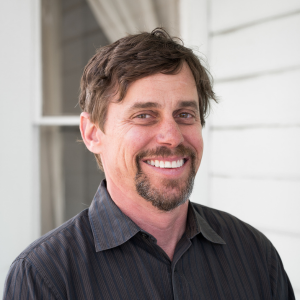
Mr. Gadow founded Linchpin Structural Engineering, Inc. in 2013, bringing with him 13 years of prior structural engineering experience and 10 years experience as a residential and commercial builder. He is responsible for the structural engineering of new residential homes, remodels and repairs as well as commercial and public structures. He has provided engineering services to local fire and utility districts, the forest service, numerous ski-resorts, as well as countless individual homeowners, builders and developers. He has also provided forensic consulting services to insurance companies, public agencies and attorneys.
Lisa Hartley, PE
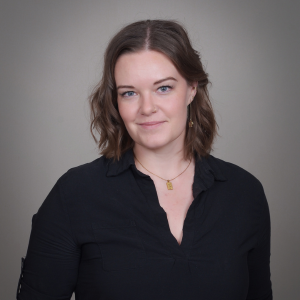
Lisa Hartley (she/her) is an Associate Principal and Partner at Linchpin Structural Engineering in Truckee, CA, where her work spans high-end residences, commercial developments, seismic upgrades, and community facilities. She serves as Co-Chair of the national Structural Engineering Engagement and Equity Committee (SE3) and is a member of the Structural Engineers Association of Central California Board, in addition to leading sustainability initiatives, business development, and mentoring at Linchpin. She has administered and participated in several successful local, state, and national mentorship programs both within and outside of NCSEA.
David Ojala, David Ojala, SE, PE, LEED AP, CWI

David is a Principal at Thornton Tomasetti, where his Structural Engineering practice focuses around applying lessons learned from his forensic investigations and post-disaster response experience into proactive risk and resilience consulting, design, and peer review. David is heavily involved in structural disaster response and assessment activities and is a frequent speaker on matters related to natural hazard risk and performance, structural safety assessment, structural plan review, and code changes. He is a Structures Specialist with FEMA Urban Search and Rescue California Task Force 4 in Oakland and a Safety Assessment Program (SAP) Trainer, Coordinator, and Evaluator for CalOES. He is currently serving as SEAONC President and a member of SEAOC’s Resilience and Legislative Committees, and is a past-chair of the SEAONC and SEAOC Existing Building Committees and the SEAONC DES Committee.